Supplements to Help Dog Longevity: A Healthspan Guide for Aging Dogs
Many pet parents search for supplements to help dogs live longer, especially as their dog starts to slow down, sleep more, move differently, or need a little more support with everyday routines. It is a natural question. We all want more good years with our dogs.
But the most responsible way to think about this topic is through healthspan. Healthspan means the time a dog spends feeling comfortable, engaged, supported, and able to enjoy daily life.

Supplements cannot guarantee a longer life, reverse aging, or replace veterinary care. They are not shortcuts around nutrition, movement, weight management, dental care, or regular checkups.
What well-designed supplements may do is support the normal systems involved in healthy aging. For adult and senior dogs, that can include joint mobility, digestion, immune balance, cognitive wellness, skin and coat health, cellular energy, antioxidant balance, and overall daily wellness.
This guide explains how to think about supplements for aging dogs, which ingredients are commonly used, what claims to question, and how to build a thoughtful routine around your dog’s actual needs.
Can Supplements Help Dogs Live Longer?

Supplements cannot promise to make a dog live longer. That matters enough to say clearly at the beginning.
A dog’s lifespan is influenced by many things, including genetics, breed size, nutrition, body condition, exercise, environment, veterinary care, dental health, and plain luck. No supplement can control all of that. Any product that suggests it can extend your dog’s life, reverse aging, or work like a proven longevity drug should be viewed with caution.
That said, the question behind the search is still valid. Pet parents are usually not asking for magic. They are asking what they can do to support their dog as well as possible over time.
That is where supplements may play a useful role.
A thoughtful supplement routine can help support normal structure and function in systems that matter as dogs age. Depending on the formula, that may include support for healthy joints, digestion, immune balance, skin and coat health, cognitive wellness, antioxidant balance, and daily cellular function.
What Supplements Can Support
Supplements can help fill specific support roles in a dog’s daily routine. For example, omega-3 fatty acids are often used to support skin, coat, immune balance, cognitive wellness, and normal inflammatory response. Probiotics and prebiotics may support digestive balance and the gut microbiome. Certain antioxidants may support normal cellular function and oxidative balance. Joint-support nutrients may help maintain comfortable movement and normal connective tissue function.
The best supplements for aging dogs are not the ones with the longest ingredient list. They are the ones built around a clear purpose.
What Supplements Cannot Promise
Supplements cannot diagnose, treat, cure, or prevent disease. They should not be used as a replacement for veterinary care, especially if your dog has a medical condition, takes medication, has sudden changes in behavior or appetite, or is showing signs of pain, discomfort, digestive upset, or mobility changes.
They also cannot guarantee lifespan extension. A supplement can be part of a healthy aging plan, but it is not the whole plan.
Why Healthspan Is the Better Goal
Instead of thinking only about lifespan, it is more useful to think about healthspan: how well your dog is supported during the years you have together.
A good healthspan routine looks at the whole dog. It includes quality food, an appropriate body weight, movement, enrichment, regular veterinary care, and daily consistency. Supplements may fit into that routine when they are chosen carefully and used for the right reasons.
Understanding the Aging Process in Dogs

Aging is not one single change. It is a gradual shift across many systems in the body. As dogs get older, they may experience changes in mobility, digestion, immune function, skin and coat quality, cellular energy, antioxidant balance, and mental engagement.
Some dogs show those changes early. Others seem steady for years. Breed size, genetics, lifestyle, body condition, and health history all matter. Large and giant breed dogs often reach senior life stages earlier than smaller dogs, while smaller dogs may remain active well into later years.
The goal of a healthy aging plan is not to stop aging. It is to support the body’s normal maintenance systems so dogs can continue feeling and functioning as well as possible.
Cellular Function and Antioxidant Balance
Everyday metabolism, activity, and environmental exposure can produce free radicals. The body has normal antioxidant systems that help maintain balance, but aging dogs may benefit from extra nutritional support for normal cellular function and oxidative balance.
Ingredients such as vitamin E, astaxanthin, polyphenols, and CoQ10 are often used in senior dog formulas because they support cellular wellness, antioxidant balance, or normal energy metabolism.
Mobility, Muscle, and Daily Comfort
Movement matters for dogs at every age. As dogs age, they may need more support for joint mobility, muscle maintenance, and comfortable daily activity. This does not mean every older dog needs the same joint supplement. It means mobility should be part of the conversation.
Ingredients such as omega-3 fatty acids, curcumin, collagen, UC-II, hyaluronic acid, glucosamine, chondroitin, and MSM are commonly used in formulas designed to support normal joint function and connective tissue health.
Digestion, Immune Balance, and the Gut-Brain Connection
The digestive system does more than process food. A healthy gut microbiome is connected to nutrient use, stool quality, immune function, and overall wellness. The gut and brain are also closely linked through the gut-brain axis.
For aging dogs, digestive balance can be especially important. Probiotics, prebiotics, fiber, and certain functional mushrooms may help support the gut and immune systems as part of a daily routine.
Cognitive Wellness and Mental Engagement
Senior dogs may benefit from support for normal brain function, mental engagement, and daily routine. Ingredients such as DHA, antioxidants, MCTs, lion’s mane mushroom, and CoQ10 are often discussed in the context of cognitive wellness and healthy aging.
Just as important, mental enrichment matters. Scent games, puzzle toys, gentle training, familiar walks, and predictable routines can all help support an aging dog’s daily confidence and engagement.
Skin, Coat, and Barrier Health
Skin and coat health are not only cosmetic. The skin barrier is part of a dog’s first line of defense and is closely tied to immune balance, omega status, and overall wellness.
Omega-3 fatty acids, vitamin E, biotin, astaxanthin, and other nutrients may support skin barrier function, coat quality, and normal immune balance. This is especially relevant for dogs whose wellness routine includes support from the outside in.
The Core Systems Behind Healthy Aging in Dogs

The best supplements for aging dogs are easier to evaluate when you think in systems rather than trends. Instead of asking, “What is the hottest ingredient?” ask, “Which system am I trying to support?”
Most dog healthspan formulas fit into one or more of these categories.
Joint Mobility and Comfortable Movement
Mobility is one of the most visible parts of aging. Dogs rely on normal joint function, connective tissue health, muscle tone, and daily movement to stay active and engaged.
Supplement ingredients in this category may include omega-3 fatty acids, curcumin, collagen, UC-II, hyaluronic acid, glucosamine, chondroitin, and MSM. These ingredients are commonly used to support normal joint structure, mobility, and comfortable movement.
Daily movement still matters. Supplements work best alongside appropriate activity, healthy weight, and veterinary guidance when mobility changes are noticeable.
Gut Health and Immune Balance
A balanced gut microbiome supports digestion, stool quality, nutrient use, and immune function. For aging dogs, gut support can be part of a broader wellness strategy because digestion and immune balance influence many parts of daily health.
Probiotics, prebiotics, fiber sources, and certain mushrooms can all be used in formulas designed to support gut and immune health. The most useful formulas explain what they include and why.
Brain and Cognitive Wellness
Cognitive wellness is an important part of healthspan. Aging dogs still need mental engagement, familiar routines, and support for normal brain function.
Ingredients often used for cognitive wellness include DHA, MCTs, antioxidants, CoQ10, and lion’s mane mushroom. These ingredients may support normal brain, cellular, or energy-related functions depending on the formula.
A supplement is only one part of cognitive support. Enrichment, social interaction, sleep, and predictable routines also matter.
Skin Barrier and Coat Health
Skin and coat health can reflect broader nutritional and immune support. The skin barrier helps protect the body from environmental stressors, and omega balance plays an important role in maintaining normal skin and coat condition.
EPA and DHA, vitamin E, biotin, and astaxanthin are often used in formulas designed to support skin barrier health, coat quality, immune balance, and antioxidant activity.
Cellular Energy and Antioxidant Balance
Aging dogs rely on normal cellular energy production and antioxidant balance to support everyday function. This is where ingredients such as CoQ10, astaxanthin, vitamin E, green tea extract, resveratrol, and other polyphenols often appear.
These ingredients do not stop aging. They may help support normal cellular processes involved in healthy aging.
Healthy Weight, Muscle, and Daily Activity
One of the most important parts of helping dogs live well longer is maintaining a healthy body condition. Extra weight can affect mobility, energy, and overall wellness.
Supplements cannot replace appropriate calories, quality protein, and regular activity. A complete healthy aging plan should support muscle maintenance, daily movement, hydration, and weight management.
Key Ingredients in Supplements to Help Aging Dogs Live Well Longer

There is no single “best” supplement for every aging dog. The right choice depends on the dog’s age, diet, size, breed, health status, medications, activity level, and individual needs.
The ingredients below are commonly used in senior dog and healthy aging formulas. Some support mobility. Some support digestion. Others support omega status, antioxidant balance, cognitive wellness, skin and coat health, or normal cellular energy.
Omega-3 Fatty Acids: EPA and DHA
Omega-3 fatty acids are among the most recognizable ingredients in supplements for aging dogs. EPA and DHA are marine omega-3s commonly used to support skin and coat health, immune balance, normal inflammatory response, cognitive wellness, and overall healthy aging.
DHA is an important structural fatty acid in the brain and eyes. EPA is often included in formulas focused on skin, coat, immune balance, and joint support. Together, EPA and DHA can be a useful part of a senior dog wellness routine.
Omega-3s may come from fish oil, krill oil, algae oil, or other marine sources. Algae oil can be a more direct source of marine omega-3s that does not rely on fish as the original source. Fish oils may provide EPA and DHA in familiar ratios. The best choice depends on formula design, sourcing, freshness, stability, and your dog’s needs.
Because omega oils can be delicate, quality matters. Look for products that take oxidation, packaging, freshness, and appropriate serving amounts seriously.
Probiotics and Prebiotics
Probiotics are beneficial microorganisms used to support a healthy gut microbiome. Prebiotics are fibers or compounds that help nourish beneficial gut bacteria.
For aging dogs, probiotics and prebiotics may support digestion, stool quality, nutrient use, immune function, and gut balance. This can make them useful in formulas designed around whole-body healthy aging.
Common probiotic species used in pet supplements may include Lactobacillus acidophilus, Bacillus coagulans, Bacillus subtilis, Saccharomyces boulardii, and Bifidobacterium animalis. Different strains can have different characteristics, so it is useful when a brand clearly identifies what is included.
Prebiotics such as inulin or fructooligosaccharides may also be used to support the gut environment.
Dogs with digestive sensitivity, immune concerns, or complex medical histories should have supplements introduced carefully and with veterinary guidance.
Functional Mushrooms and Adaptogens
Functional mushrooms and adaptogens are often used in wellness formulas to support balance, immune function, stress response, and overall resilience. In dog supplements, common mushroom ingredients may include reishi, turkey tail, and lion’s mane.
Reishi is often used in formulas focused on immune balance and general wellness. Turkey tail is commonly discussed for immune support and gut-related wellness. Lion’s mane is often included in formulas designed to support cognitive wellness and the gut-brain connection.
Adaptogens such as ashwagandha may appear in some formulas designed to support calm behavior or a healthy stress response. These ingredients should be used thoughtfully and may not be appropriate for every dog.
The key is purpose. A formula should not include mushrooms or adaptogens simply because they are popular. Each ingredient should have a clear reason for being there, an appropriate serving amount, and dog-specific guidance.
Turmeric Curcumin Extract
Curcumin is the best-known active compound in turmeric. In senior dog supplements, turmeric or curcumin extract is commonly used to support antioxidant balance, normal inflammatory response, and joint wellness.
Curcumin is often included in formulas focused on mobility, comfortable movement, and whole-body healthy aging. Because curcumin is fat-soluble and can be difficult to absorb, many formulas pair it with fats, phospholipids, or other delivery technologies.
Not every turmeric product is the same. Look for formulas that clearly identify whether they use turmeric powder, turmeric extract, curcumin, or a more specialized form. Also ask your veterinarian before using turmeric or curcumin if your dog takes medication or has a medical condition.
Antioxidants: Astaxanthin, Vitamin E, Polyphenols, and Resveratrol
Antioxidants help the body maintain normal oxidative balance. This matters because everyday metabolism, activity, and environmental exposure can all produce free radicals.
Astaxanthin is a red-orange carotenoid often used in formulas focused on antioxidant activity, cellular support, skin and coat health, and omega stability. Vitamin E is a fat-soluble antioxidant commonly used to support cellular health and protect delicate fats in formulas. Polyphenols from ingredients such as green tea, berries, or resveratrol may also be used to support antioxidant balance.
For aging dogs, antioxidants can be part of a larger strategy to support normal cellular function, cognitive wellness, immune balance, and healthy aging. They should not be framed as anti-aging cures or disease-prevention tools.
Collagen, UC-II, Hyaluronic Acid, Glucosamine, Chondroitin, and MSM
Joint-support formulas often include nutrients that support connective tissue, cartilage, joint structure, or normal mobility.
Collagen is a structural protein found in connective tissues. UC-II is a branded form of undenatured type II collagen used in some joint-support formulas. Hyaluronic acid is naturally found in joint fluid and connective tissues. Glucosamine, chondroitin, and MSM are also common ingredients in senior dog joint supplements.
These ingredients are often used to support normal joint structure and comfortable movement. They are especially relevant for dogs whose healthy aging plan includes mobility support.
As always, the goal is not to self-diagnose joint problems or replace veterinary care. If your dog is limping, reluctant to move, struggling with stairs, or showing signs of discomfort, talk with your veterinarian.
CoQ10 and Cellular Energy Support
Coenzyme Q10, often called CoQ10, is involved in normal cellular energy production. It is found in the body and plays a role in mitochondrial function.
In senior dog supplements, CoQ10 is often included to support cellular energy, daily wellness, and normal heart function. It may be especially relevant in formulas focused on healthy aging and whole-body support.
CoQ10 is fat-soluble, so formula design can affect how it is delivered. It is often paired with oils, fats, or other ingredients that fit a cellular wellness formula.
MCTs and Healthy Fats
MCTs, or medium-chain triglycerides, are fats commonly derived from coconut oil or palm kernel oil. They are metabolized differently than some other fats and are often discussed in the context of energy support and cognitive wellness.
In senior dog formulas, MCTs may serve two roles. They can support normal energy metabolism, and they can also act as a carrier for fat-soluble ingredients such as curcumin, astaxanthin, vitamin E, and CoQ10.
Healthy fats can be useful, but more is not always better. Dogs with pancreatitis history, fat sensitivity, digestive issues, or specific medical conditions need veterinary guidance before adding fat-rich supplements.
Best Supplements for Aging Dogs by Wellness Goal
| Wellness Goal | Supplement Categories to Consider | What They May Support | Good Question to Ask Your Veterinarian | |
|---|---|---|---|---|
| Joint mobility and comfortable movement | Omega-3s, curcumin, collagen, UC-II, hyaluronic acid, glucosamine, chondroitin, MSM | Normal joint function, connective tissue support, comfortable movement, and healthy mobility routines | Is my dog’s mobility change normal aging, or should we evaluate it further? | |
| Gut and immune balance | Probiotics, prebiotics, fiber, functional mushrooms | Digestive balance, stool quality, nutrient use, immune function, and microbiome support | Which probiotic, prebiotic, or gut-support ingredient makes sense for my dog’s history? | |
| Cognitive wellness | DHA, MCTs, lion’s mane, antioxidants, CoQ10 | Normal brain function, cellular energy, mental engagement, and healthy aging support | Are my dog’s behavior changes normal aging, or should we check for other causes? | |
| Skin and coat health | EPA, DHA, vitamin E, biotin, astaxanthin | Skin barrier function, coat quality, omega balance, antioxidant activity, and immune balance | Could diet, allergies, environment, or another issue be affecting my dog’s skin? | |
| Cellular energy | CoQ10, MCTs, healthy fats, B vitamins where appropriate | Normal cellular energy metabolism, mitochondrial function, and daily wellness | Does my dog need targeted energy support, or should we check diet and health status first? | |
| Antioxidant balance | Astaxanthin, vitamin E, polyphenols, resveratrol, berry extracts | Normal oxidative balance, cellular wellness, and antioxidant support for healthy aging | Is this antioxidant formula appropriate with my dog’s medications or health history? | |
| Whole-body healthy aging | Multi-system formulas with clear purpose and transparent active ingredients | Support across mobility, gut health, immune balance, cognitive wellness, skin, coat, and cellular systems | Are these ingredients necessary together, or would a simpler routine be better? |
Choosing the Right Supplement Format for Aging Dogs

The format of a supplement matters because the best supplement is the one your dog will actually take consistently. A formula can look impressive on paper, but if it is messy, hard to measure, difficult to give, or unpleasant for your dog, it becomes harder to use every day.
For aging dogs, soft chews can be one of the most practical formats when they are made well. They are easy to measure, easy to give, and simple to build into a daily routine. That consistency matters because many supplements are designed to support normal systems over time, not act as one-time fixes.
Liquids, powders, capsules, and tablets can all have a place too. Some ingredients make more sense in liquid or powder form, especially when a dog needs a larger serving amount or a simple single-ingredient building block. But for concentrated nutrients, potent extracts, probiotics, mushrooms, antioxidants, and multi-system formulas, a well-designed soft chew can be an excellent daily delivery format.
Soft Chews
Soft chews are popular because they are simple. You can count them, serve them, and build them into a routine without measuring spoons, droppers, scoops, or capsules. For senior dogs, that can be especially helpful if they are picky, have dental sensitivity, resist pills, or already take medications.
But not all soft chews are equal. A good soft chew should be more than a flavored treat with active ingredients added in. It should be designed around the ingredients themselves, with clear serving directions, purposeful actives, appropriate texture, and a process that respects sensitive nutrients.
A low-heat or no-heat forming process can be especially useful for formulas that include delicate ingredients. Heat-sensitive nutrients, probiotics, oils, antioxidants, and certain botanical or mushroom extracts may be better supported by a process that avoids unnecessary heat exposure. This does not make a chew automatically better, but it is a meaningful formulation choice when the goal is to preserve ingredient integrity.
Soft chews can also help protect daily consistency. Instead of mixing powders into food or measuring liquids, pet parents can give a clear serving based on the label. That makes soft chews a strong fit for multi-ingredient formulas designed to support related aging systems, such as joint mobility, digestion, immune balance, cognitive wellness, skin and coat health, antioxidant balance, and whole-body homeostasis.
For concentrated ingredients and potent extracts, chews can be especially practical. Many of these ingredients are used in smaller amounts, which makes them easier to deliver in a chew without requiring a large scoop or messy liquid serving.
Liquids and Fat-Based Formulas
Liquid supplements can still be useful, especially for ingredients that are naturally oil-based or when a flexible serving size is important. Fish oil, algae oil, MCT oil, and other fat-based formulas are common examples.
Fat-based liquids can also help deliver fat-soluble nutrients such as omega-3 fatty acids, curcumin, astaxanthin, vitamin E, and CoQ10. For some dogs, mixing a liquid into food is easy and effective.
The tradeoff is convenience. Liquids can be messy, may have stronger odors, can be harder to travel with, and may not be ideal for dogs with fat sensitivity or digestive concerns. They can also be less precise if the serving depends on pumps, teaspoons, or droppers that vary by user.
Liquids are often best when the formula is built around oils or larger fatty acid servings. They are not always necessary for concentrated extracts or multi-system daily formulas.
Powders
Powders can make sense when an ingredient needs a larger serving amount or when the formula is built around dry ingredients. Probiotics, mushroom powders, enzymes, greens, fiber, collagen peptides, and some joint-support ingredients are commonly delivered this way.
The benefit is flexibility. Powders can be mixed into meals and can carry larger amounts of certain ingredients than a small chew. This can be useful for broad nutritional building blocks or ingredients that require gram-level servings.
The challenge is acceptance. Some dogs notice changes in smell, texture, or taste. Powders can also be messy, easy to under-dose or over-dose, and more sensitive to storage conditions depending on the ingredient.
Powders are a good fit for some formulas, but they are not automatically better. For potent extracts, antioxidants, mushrooms, probiotics, and multi-system actives used in smaller daily amounts, a soft chew can often be easier for everyday use.
Capsules and Tablets
Capsules and tablets can offer precise serving amounts, but they are often less convenient for dogs. Some dogs swallow them easily. Others spit them out, avoid food that contains them, or need them hidden in a treat.
For senior dogs, capsules and tablets may be harder if there is dental sensitivity, medication fatigue, appetite changes, or picky eating. They can still be useful when a veterinarian recommends a specific nutrient or when the dog accepts them without stress.
Why Daily Consistency Matters Most
Most aging-support supplements are designed for consistent use over time. That means the delivery format should make life easier, not harder.
Soft chews have a real advantage here when they are formulated well. They are easy to measure, easy to give, and easy to repeat every day. For many pet parents, that makes them a practical format for supporting healthy aging systems without turning supplementation into a chore.
Liquids and powders still have their place, especially for oil-based nutrients, large serving amounts, or simple building-block ingredients. But for daily formulas built around concentrated actives, mushrooms, probiotics, antioxidants, joint-support nutrients, and multi-system support, a carefully made soft chew can be one of the most useful formats for aging dogs.
What to Look for in a Senior Dog Supplement
With so many products available, choosing a senior dog supplement can feel overwhelming. Labels may list dozens of ingredients, but more ingredients do not automatically mean better support.
A good supplement should make its purpose clear. It should help you understand what systems it supports, what ingredients are included, how much to give, and when veterinary guidance is important.
Clear Active Ingredients
Look for formulas that clearly identify their active ingredients. If a product says it supports healthy aging but does not explain what is doing the work, that is a red flag.
For example, a joint-support formula should make it clear whether it includes omega-3s, collagen, glucosamine, chondroitin, MSM, curcumin, or other mobility-support nutrients. A gut formula should clearly identify probiotic strains, prebiotic fibers, or other digestive-support ingredients.
Transparent Serving Amounts
Responsible supplement labels should make serving directions clear. You should be able to tell how much your dog receives based on weight or daily serving size.
Be cautious with formulas that hide everything in vague proprietary blends. Proprietary blends are not always bad, but they can make it harder to understand whether a dog is receiving a meaningful amount of each ingredient.
Dog-Specific Directions
Dogs are not small humans. A supplement designed for dogs should provide dog-specific serving guidance, cautions, and use instructions.
Serving size should account for weight. The label should also explain whether the product is intended for daily use, occasional use, adult dogs, senior dogs, or a specific life stage.
Quality Standards and Testing
Quality matters in pet supplements. Look for brands that take sourcing, manufacturing, testing, and label accuracy seriously. Third-party testing, clear quality standards, and responsible manufacturing practices can help build trust.
For pet supplements, NASC membership or the NASC Quality Seal can also be a useful quality signal when applicable. It does not mean every product is perfect, but it does show participation in a recognized pet supplement quality program.
Ingredients With a Purpose
The best formulas are not built by adding every trendy ingredient into one jar. They are built around a clear support goal.
Ask what each ingredient is doing. Is it there for mobility, digestion, immune balance, cognitive wellness, skin and coat health, antioxidant balance, or cellular energy? Does the formula make sense as a whole?
A shorter formula with purposeful ingredients may be more useful than a long list that looks impressive but lacks direction.
Responsible Claims and Veterinary Guidance
Be cautious with products that promise dramatic results, guaranteed lifespan extension, disease prevention, or cure-like benefits.
A responsible supplement brand should use structure and function language, explain limitations, and encourage veterinary guidance when appropriate.
Ask your veterinarian before starting a new supplement if your dog has a diagnosed condition, takes medication, is pregnant or nursing, has digestive sensitivity, has allergies, or has sudden changes in behavior, appetite, mobility, or energy.
Safety, Side Effects, and When to Ask Your Veterinarian
Natural does not automatically mean safe. Senior dogs can be more sensitive to changes in diet, fat intake, fiber, herbs, probiotics, and new ingredients. Even helpful supplements can be the wrong fit for a particular dog.
A careful approach is especially important for aging dogs because they are more likely to have medical histories, medications, or individual sensitivities.
Dogs With Medical Conditions or Medications
Ask your veterinarian before adding a supplement if your dog has a medical condition or takes medication. This is especially important with ingredients that may affect digestion, immune function, blood clotting, liver metabolism, or medication tolerance.
Examples include curcumin, green tea extract, resveratrol, high-fat oils, certain herbs, and multi-ingredient formulas.
This does not mean these ingredients are bad. It means context matters.
Digestive Sensitivity and Allergies
Some dogs are sensitive to new fats, fibers, proteins, flavors, or botanicals. Probiotics and prebiotics can also change stool patterns when first introduced.
Start slowly when appropriate, follow label directions, and watch your dog’s tolerance. Stop use and contact your veterinarian if your dog develops vomiting, diarrhea, loss of appetite, unusual lethargy, itching, swelling, or any concerning change.
Multiple Supplements at Once
Supplement stacking can create problems. A dog may already be receiving omega-3s in one product, joint ingredients in another, and probiotics in a third. Adding a new multi-ingredient formula can accidentally duplicate nutrients or make it harder to know what is helping or causing an issue.
Before combining supplements, check the labels side by side. Look for overlapping ingredients and ask your veterinarian if the combination makes sense.
Why Natural Does Not Automatically Mean Safer
Many pet parents look for natural supplements for senior dogs, and that is understandable. Natural ingredients can be useful, but the word “natural” does not guarantee safety, quality, purity, or appropriate use.
Dose, sourcing, testing, formula design, and your dog’s individual health all matter.
How to Introduce a Supplement Gradually
When possible, introduce one new supplement at a time. Follow the product label, and consider starting gradually if your dog has a sensitive stomach or if the formula allows it.
Give the supplement consistently, track changes, and avoid changing several parts of your dog’s routine at once. That makes it easier to understand what your dog is tolerating well.
Creating a Holistic Wellness Plan to Help Dogs Live Well Longer
Supplements can be part of a healthy aging routine, but they work best when the rest of the routine is strong. Daily habits matter.
A dog’s long-term wellness is shaped by food, movement, body condition, sleep, enrichment, dental care, veterinary monitoring, and consistency. Supplements should support that foundation, not replace it.
Balanced Diet and Hydration
A balanced diet with appropriate calories, quality protein, healthy fats, fiber, and essential nutrients is one of the most important parts of healthy aging.
For older dogs, nutrition should support muscle maintenance, digestion, skin and coat health, immune balance, and healthy body condition. Fresh water should always be available.
If your dog is gaining or losing weight, refusing food, drinking more than usual, or having digestive changes, talk with your veterinarian.
Regular Exercise and Mobility
Movement helps support joint function, muscle tone, circulation, healthy weight, and mental engagement. For senior dogs, low-impact movement is often better than intense activity.
Walking, swimming, gentle play, controlled movement, and sniff-based enrichment can all be useful depending on the dog.
Exercise should match your dog’s age, breed, body condition, and health status. If movement changes suddenly, get veterinary guidance.
Mental Stimulation and Enrichment
Healthy aging is not only physical. Dogs need engagement, routine, and opportunities to use their senses.
Puzzle toys, scent games, slow walks, gentle training, food enrichment, and social interaction can support mental engagement. Familiar routines can also help older dogs feel more confident and secure.
Healthy Weight and Body Condition
Maintaining a healthy weight is one of the most important ways to support an aging dog. Extra weight can make movement harder and may affect overall daily comfort.
A supplement cannot offset too many calories or too little movement. If you are unsure about your dog’s body condition, ask your veterinarian to help assess it.
Routine Veterinary Care
Regular veterinary care becomes even more important as dogs age. Wellness visits can help monitor weight, teeth, mobility, digestion, skin, behavior, and overall health.
Your veterinarian can also help decide whether supplements are appropriate for your dog’s diet, medications, health history, and life stage.
Our Approach to Healthy Aging Support for Dogs

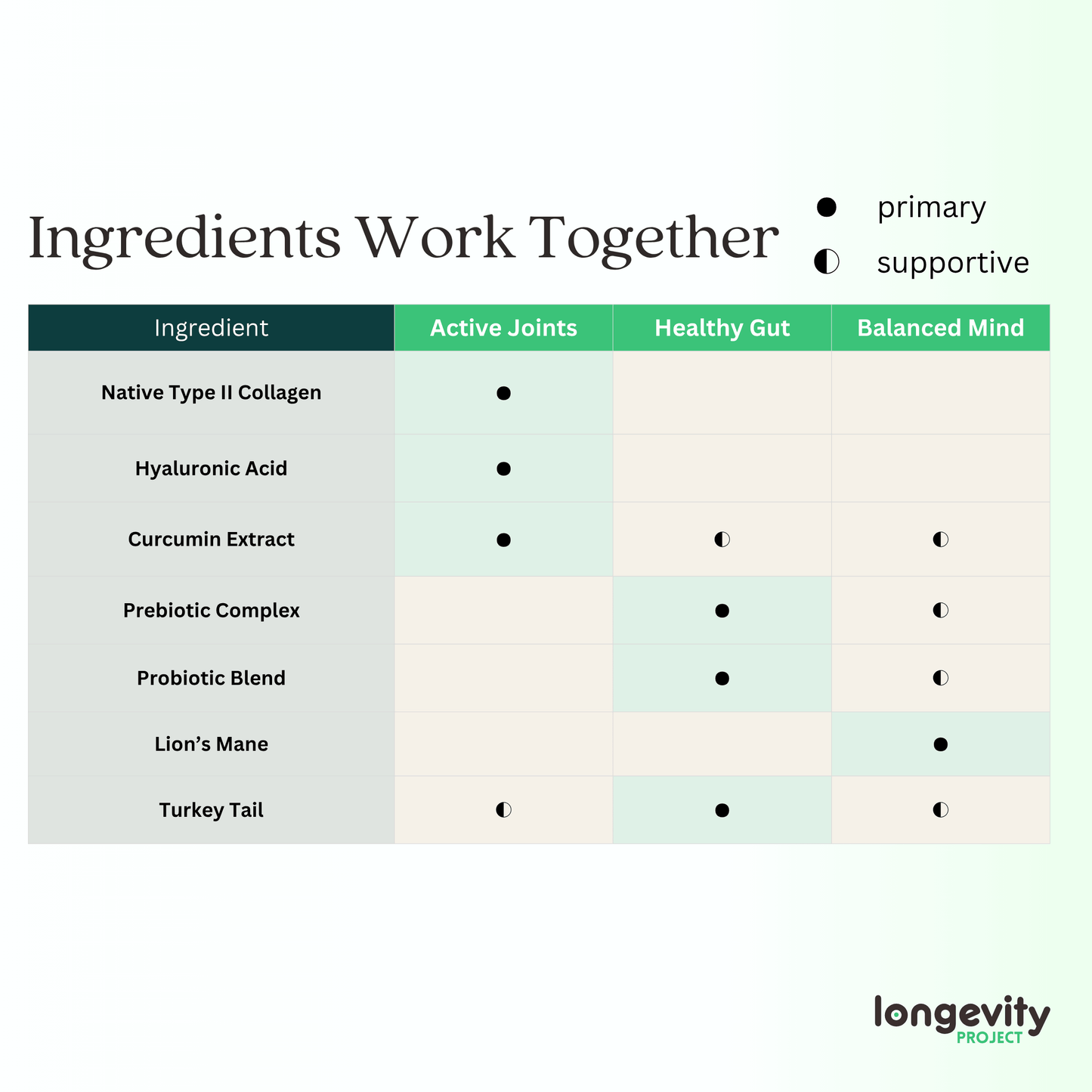
At the Longevity Project, we think about healthy aging through systems. A dog does not age through one pathway. Mobility, digestion, immune balance, cognitive wellness, skin barrier health, and cellular function all work together over time.
That is why our formulas are designed to support complementary areas of daily healthspan rather than chasing a single trend or making unrealistic promises.
Longevity-ONE: Foundational Daily Support
Longevity-ONE is our foundational daily soft chew for adult and senior dogs. It was created to support the everyday connection between normal joint mobility, digestive balance, cognitive function, immune health, and whole-body homeostasis.
The goal is simple: daily support for the systems dogs rely on as they age.
Longevity-ONE is not a miracle and it is not a cure-all. It is a thoughtful daily formula designed to fit into a broader healthy aging routine that includes quality food, movement, enrichment, and veterinary care.
Longevity-BLUE: Marine Omega and Antioxidant Support
Longevity-BLUE is our marine-based omega soft chew for adult and senior dogs. It is designed to support skin barrier health, coat quality, immune balance, antioxidant activity, omega status, and long-term wellness.
A resilient skin and coat alongside proactive immune support is the first line of defense for keeping dogs happy and healthy. With highlights like encapsulated EPA and astaxanthin, Longevity-BLUE supports external health while complementing a broader healthspan routine.
How to Decide What Fits Your Dog
Some dogs may benefit most from foundational daily support. Others may need targeted omega support for skin, coat, immune balance, or antioxidant activity. Some routines may include both, depending on the dog and veterinary guidance.
The best starting point is your dog’s actual needs. Look at age, diet, weight, mobility, skin and coat condition, digestion, activity level, and any veterinary recommendations.

Supporting Your Aging Dog With Thoughtful Supplements
Choosing supplements for aging dogs should start with the dog in front of you. Not every senior dog needs the same ingredients, the same format, or the same level of support.
The best supplements for aging dogs are built around clear wellness goals, responsible ingredients, appropriate serving directions, quality standards, and honest claims. They should support a daily routine, not replace the foundations of healthy aging.
Ingredients such as omega-3 fatty acids, probiotics, prebiotics, functional mushrooms, curcumin, antioxidants, collagen, hyaluronic acid, CoQ10, MCTs, and other targeted nutrients can all play a role in supporting normal systems involved in healthy aging.
When paired with balanced nutrition, healthy weight, regular movement, mental enrichment, dental care, veterinary guidance, and daily consistency, supplements may help support your dog’s quality of life through the aging process.
The goal is not to promise more years. The goal is to support more good days.
Essential Tips About Supplements to Help Dogs Live Longer

The best supplements for aging dogs are the ones that match your dog’s individual needs. Common categories include omega-3 fatty acids, probiotics, prebiotics, joint-support nutrients, antioxidants, functional mushrooms, CoQ10, and healthy fats. These ingredients may support mobility, digestion, immune balance, cognitive wellness, skin and coat health, antioxidant balance, and normal cellular function. The right choice depends on your dog’s age, diet, health status, medications, and veterinary guidance.
No supplement can guarantee a longer life. When people search for supplements to help dogs live longer, the more responsible goal is supporting healthspan. That means supporting the systems that help dogs stay comfortable, engaged, and well-supported as they age. Supplements may help support normal joint mobility, digestion, immune balance, skin and coat health, cognitive wellness, and antioxidant balance as part of a broader wellness routine.
A dog longevity supplement is usually a supplement designed to support healthy aging and long-term wellness. It may focus on mobility, digestion, immune balance, cognitive wellness, skin barrier health, cellular energy, or antioxidant balance. A responsible longevity supplement should not claim to extend lifespan, reverse aging, or replace veterinary care. It should support normal structure and function as part of a daily routine.
It depends on what “work” means. If the claim is guaranteed lifespan extension, that is not a responsible supplement promise. If the goal is supporting normal systems involved in healthy aging, then certain ingredients may be useful when chosen carefully. A good supplement should have a clear purpose, appropriate serving directions, quality standards, and realistic claims. It should also fit your dog’s needs and be used consistently.
Senior dogs do not all need the same supplements. Some may benefit from joint-support nutrients, while others may need digestive support, omega-3s, antioxidants, or skin and coat support. Many dogs benefit most from a routine that supports multiple systems, including mobility, gut health, immune balance, cognitive wellness, and healthy weight. Ask your veterinarian what makes sense based on your dog’s age, diet, medical history, and current routine.
Omega-3 fatty acids, especially EPA and DHA, are commonly used in supplements for aging dogs. They may support skin and coat health, immune balance, normal inflammatory response, cognitive wellness, and overall healthy aging. Quality matters because omega oils can be delicate. Look for clear sourcing, appropriate serving directions, and freshness-focused packaging or formula design.
Probiotics may support digestive balance, stool quality, nutrient use, immune function, and the gut microbiome. For senior dogs, gut support can be part of a broader healthy aging routine. Some formulas also include prebiotics to help nourish beneficial bacteria. Dogs with digestive sensitivity, immune concerns, or medical conditions should start probiotics carefully and with veterinary guidance.
Natural supplements are not automatically safer. Many natural ingredients can be useful, but safety depends on the ingredient, serving amount, quality, formula design, and your dog’s individual health. Senior dogs may be more likely to take medications or have medical conditions, so it is important to ask your veterinarian before starting supplements, especially multi-ingredient formulas or products with herbs and concentrated extracts.
Many supplements are designed for daily use, but whether your dog should take one every day depends on the product and your dog’s needs. Follow the label directions and ask your veterinarian if your dog has a medical condition, takes medication, has digestive sensitivity, or is already using other supplements. Daily consistency matters, but the routine should still be appropriate for your dog.
Ask your veterinarian before starting a new supplement if your dog has a diagnosed condition, takes medication, is pregnant or nursing, has allergies, has digestive sensitivity, or has sudden changes in appetite, energy, mobility, stool, behavior, skin, or coat. You should also ask before combining multiple supplements, especially if they contain overlapping ingredients.

A modern approach to health + wellness
Even for those on the best diet, modern science shows us the right combination of system-wide support can have a significant impact on healthspan. That's why every improving iteration of Longevity-ONE delivers optimal amounts of cutting edge ingredients in forms that helps pets thrive.
Interested in learning about optimizing the lifespan and healthspan of pets? Check out our full collection of guides, here.