As pet owners, we cherish the companionship and love our pets bring into our lives, and we naturally want them to feel their best for as long as possible. While lifespan is often part of that conversation, the quality of those years deserves just as much attention. That is where the concept of healthspan comes in.
Healthspan focuses on the years a pet spends feeling well, staying active, engaging with daily life, and maintaining normal physical and cognitive function. Understanding the difference between lifespan and healthspan can help pet owners build proactive routines that support wellness through every stage of life.
This guide explores the concepts of healthspan and lifespan, looks at the normal aging process in pets, and offers practical strategies to support daily vitality, comfort, and well-being.
Lifespan vs. Healthspan: What’s the Difference?
Lifespan refers to the total number of years an animal lives. It is a straightforward measure of time, but it does not always reflect how a pet feels or functions during those years.
Healthspan refers to the period of life during which a pet maintains comfort, activity, engagement, and overall well-being. The focus is not just on how long a pet lives, but on how well they live.
A longer life is meaningful when it is supported by good nutrition, regular movement, healthy body condition, mental enrichment, veterinary care, and thoughtful daily routines.
The Importance of Healthspan for Pets
Just like in humans, the goal for pets is not simply more time. It is better-supported time. A healthspan-focused approach prioritizes daily comfort, mobility, cognitive wellness, immune balance, digestive health, skin and coat quality, and overall vitality.
By focusing on healthspan, pet owners can support the everyday systems that help pets stay active, engaged, and connected to their families as they age.
The Science Behind Aging in Pets
Aging is a natural process that affects the body across many systems. As pets get older, they may experience changes in energy, mobility, digestion, immune response, cognitive function, and cellular health.
Understanding these changes can help pet owners make thoughtful choices around nutrition, movement, enrichment, supplements, and veterinary care.
1. Cellular Aging
Cellular aging refers to the natural changes that occur in cells over time. As pets age, their bodies may need additional support for normal cellular maintenance, antioxidant balance, and tissue health.
Impact on Pets:
Supporting normal cellular function can be an important part of healthy aging. Ingredients and routines that support antioxidant activity, cellular energy, and whole-body wellness may help aging pets maintain vitality as part of a balanced care plan.
2. Oxidative Stress and Cellular Energy
Oxidative stress occurs when the body’s normal free radical activity and antioxidant systems become imbalanced. Free radicals are produced naturally through everyday metabolism, activity, and environmental exposure.
Cellular energy also plays an important role in daily vitality. Mitochondria are involved in normal cellular energy production, and supporting these pathways can be helpful for aging pets.
Impact on Pets:
As pets age, they may benefit from support for antioxidant balance and cellular energy. Nutrients such as omega-3 fatty acids, Coenzyme Q10, vitamin E, astaxanthin, and certain plant compounds may be included in formulas designed to support normal cellular function and daily vitality.
3. Gene Expression and Healthy Aging
Gene expression refers to the way the body uses genetic information to support normal biological functions. Aging, nutrition, activity, stress, and environment can all influence how the body maintains balance over time.
Impact on Pets:
Healthy routines can help support normal metabolic function, immune balance, and overall wellness. While this area of science continues to grow, pet owners can focus on practical foundations: balanced nutrition, regular activity, healthy body condition, enrichment, and routine veterinary care.
4. Immune Aging and Healthy Inflammatory Response
As pets age, their immune systems may benefit from additional support. A healthy immune system helps maintain overall wellness and is closely connected to digestion, skin health, activity, and vitality.
A healthy inflammatory response is also important for normal movement, comfort, and tissue function.
Impact on Pets:
Supporting immune balance and a healthy inflammatory response can be part of a senior pet wellness plan. This may include high-quality nutrition, omega-3 fatty acids, functional mushrooms, antioxidants, probiotics, and other ingredients selected for normal structure and function support.
Proactive Approaches to Supporting Healthspan in Pets
Understanding aging is only the first step. The next step is building daily routines that support your pet’s wellness over time. These strategies can help maintain comfort, activity, engagement, and overall vitality.
1. Nutrition: The Foundation of Healthspan
A well-balanced, nutrient-rich diet is one of the most important parts of a healthy aging plan. The right diet can help support healthy body condition, digestion, skin and coat health, immune balance, muscle maintenance, and daily energy.
Antioxidant-Supportive Foods:
Foods such as blueberries, broccoli, turmeric, and other colorful plant ingredients contain naturally occurring compounds that can help support antioxidant balance.
Healthy Fats:
Omega-3 fatty acids, found in fish oil and algae oil, support skin and coat health, cognitive wellness, immune balance, joint function, and overall vitality.
High-Quality Protein:
Protein helps support muscle maintenance, body condition, and daily strength. Aging pets may benefit from highly digestible, high-quality protein sources that fit their individual needs.
2. Regular Exercise: Keeping Body and Mind Active
Exercise supports both physical and mental well-being. Regular activity helps maintain muscle tone, joint function, healthy body condition, circulation, and daily vitality. It also provides enrichment, which is important for cognitive wellness.
Tailored Exercise Plans:
Exercise should be appropriate for your pet’s age, breed, size, activity level, and physical condition. Younger pets may enjoy more vigorous activity, while older pets may benefit from gentle walks, swimming, controlled play, or other low-impact movement.
Mental Stimulation:
Puzzle toys, scent games, training exercises, food games, and interactive play can help support mental engagement. Keeping the mind active is an important part of healthy aging.
3. Supplements: Supporting Healthspan from Within
A balanced diet is the foundation, but supplements can help support specific wellness areas as pets age. The best supplement routine should be tailored to the pet’s needs and used alongside veterinary guidance.
Joint Health Support:
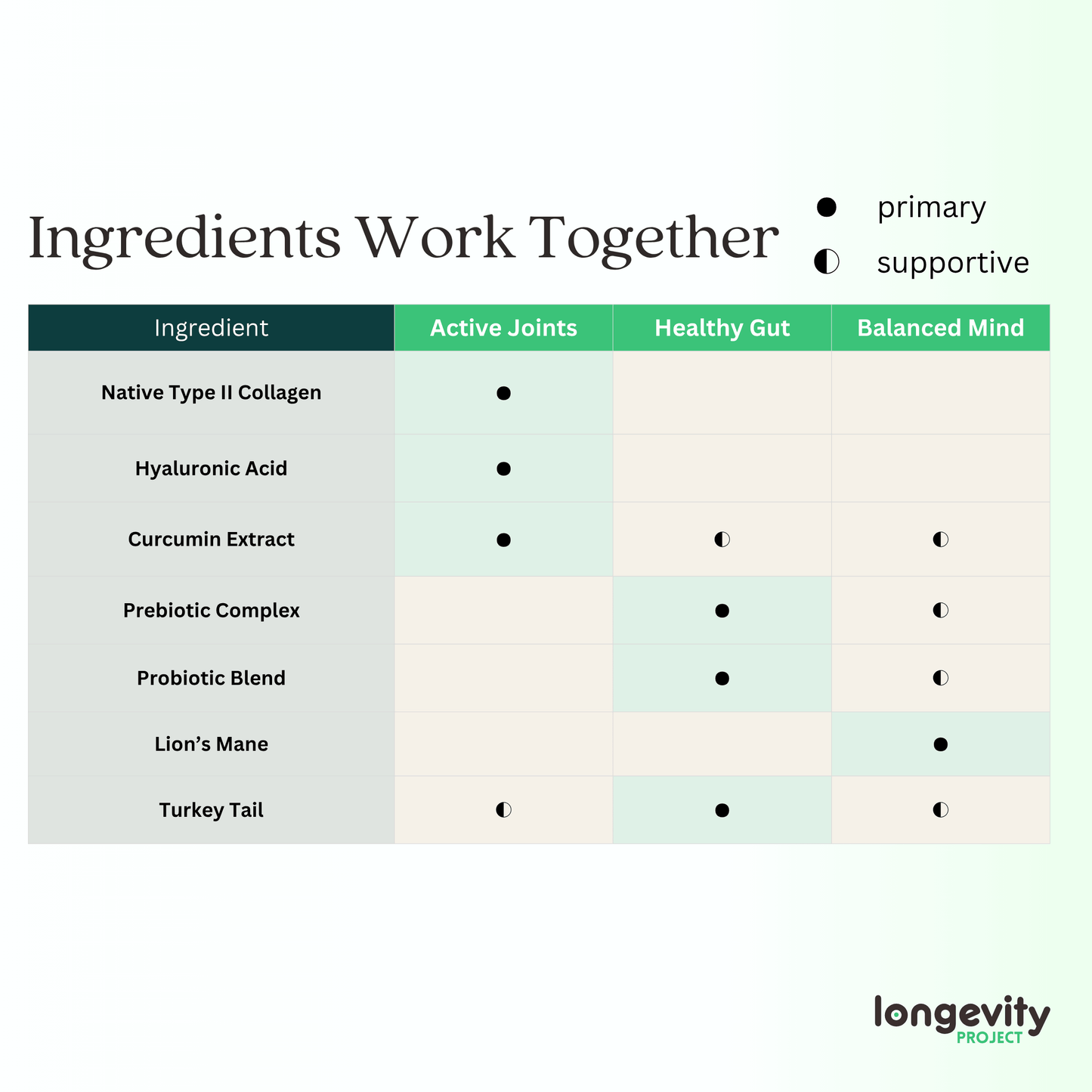
Ingredients such as glucosamine, chondroitin, MSM, omega-3 fatty acids, turmeric, hyaluronic acid, and undenatured type II collagen may be used to support normal joint function, mobility, flexibility, and everyday comfort.
Cognitive Wellness Support:
Ingredients such as DHA, MCT oil, vitamin E, Coenzyme Q10, functional mushrooms, and antioxidant-supportive compounds may help support normal cognitive function, mental alertness, and daily engagement.
Cellular Energy Support:
Coenzyme Q10, MCT oil, omega-3 fatty acids, and certain antioxidant-supportive ingredients may help support normal cellular energy production and daily vitality.
4. Regular Veterinary Check-Ups: Ongoing Wellness Monitoring
Routine veterinary care is an important part of a healthspan-focused plan. Your veterinarian can help monitor changes in weight, mobility, dental health, digestion, behavior, energy, and overall wellness.
Routine Wellness Testing:
Blood work, physical exams, dental evaluations, and age-appropriate screenings can help your veterinarian understand your pet’s changing needs and recommend appropriate care.
Dental Care:
Dental health is an important part of overall wellness. Regular dental care, including veterinary cleanings when appropriate and at-home oral care, can support comfort, appetite, and daily well-being.
5. Stress Management: Supporting Calm and Balance
Stress can affect behavior, digestion, sleep, immune balance, and overall well-being. Supporting a calm, stable routine is an important part of healthy aging.
Routine and Stability:
Pets often thrive with predictable routines for meals, walks, rest, play, and social interaction. Consistency can help support confidence and emotional balance.
Safe Spaces:
A quiet, comfortable place to rest can help pets decompress when they feel overstimulated, tired, or unsure.
Calm Support Ingredients:
Certain ingredients, such as L-theanine, ashwagandha, chamomile, or other calming-support nutrients and botanicals, may help support a balanced mood when used appropriately in pet-specific formulas.
The Role of the Dog Aging Project in Healthspan Research
1. Genetic and Environmental Factors
The Dog Aging Project is a large research initiative studying aging in dogs across breeds, sizes, lifestyles, and environments. Research like this helps improve understanding of the factors that influence healthy aging in companion animals.
Implications for Pet Owners:
As this field develops, it may help inform better wellness practices for dogs, including nutrition, activity, veterinary care, environmental enrichment, and age-appropriate routines.
2. Translational Research
Dogs share many aspects of daily life with humans, including home environments, routines, exposures, and social bonds. Studying healthy aging in dogs may also provide insights that are useful across species.
Cross-Species Applications:
Healthspan research can help deepen our understanding of aging, wellness, and quality of life. For pet owners, the practical takeaway is simple: daily habits matter, and supporting wellness early can help pets maintain comfort and vitality over time.
Conclusion: Emphasizing Healthspan for a Fuller, Happier Life
Focusing on healthspan, rather than just lifespan, means prioritizing the quality of the years your pet spends with you. It means supporting mobility, cognitive wellness, digestive balance, immune health, antioxidant activity, healthy body condition, and emotional well-being.
The goal is not to promise more years or prevent every challenge that comes with aging. The goal is to support the everyday systems that help pets stay active, engaged, comfortable, and connected to their families.
By combining balanced nutrition, regular movement, mental enrichment, thoughtful supplementation, and routine veterinary care, pet owners can build a wellness plan that supports pets through every stage of life.
What Is Healthspan vs. Lifespan?
Lifespan refers to the total number of years a pet lives.
Healthspan refers to the years a pet maintains comfort, activity, engagement, and overall well-being.
A healthspan-focused approach is about supporting quality of life, not simply counting years.
How to Support Healthspan in Pets:
Nutrition:
Choose a balanced diet that supports healthy body condition, digestion, skin and coat health, immune balance, and daily energy.
Exercise:
Provide regular physical activity and mental enrichment tailored to your pet’s age, size, breed, and individual condition.
Supplements:
Use targeted supplements to support normal joint function, cognitive wellness, cellular energy, digestive balance, immune health, and antioxidant activity.
Veterinary Care:
Schedule routine veterinary visits to monitor wellness and adjust care as your pet’s needs change.
Why Focus on Healthspan?
Focusing on healthspan helps support the quality of your pet’s daily life. It encourages proactive care, consistent routines, and thoughtful support for the systems that help pets stay comfortable, active, and engaged through every life stage.